Canon Rebel T6 Best Image Quality Setting Guide
Hey there! So, you’ve got yourself a Canon Rebel T6 and you’re itching to get the absolute best out of its image quality, right? It’s super common to wonder about the ‘canon rebel t6 best image quality setting’ because this camera can really produce some fantastic shots when you know how to tweak it.
Sometimes, just pointing and shooting doesn’t quite capture the magic you’re seeing. You want those vibrant colors, sharp details, and that pleasing background blur. Don’t worry, we’re going to dive into how to make your Rebel T6 shine!


It’s all about understanding a few key settings that make a big difference. We’ll look at how to get the most out of your camera’s sensor and lens combination. Let’s get those photos looking absolutely professional!


The 10 Canon Rebel T6 Best Image Quality Setting Reviewed
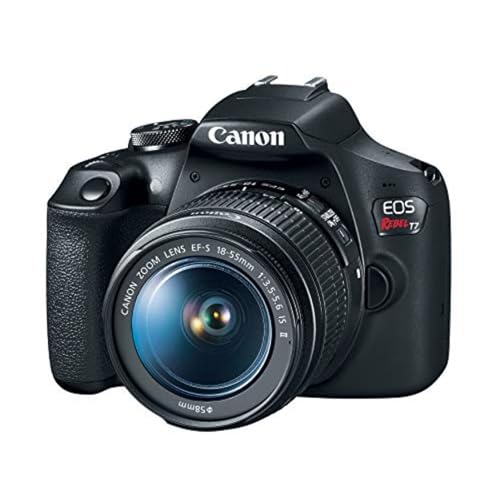
1. Eos Rebel T7 Dslr Camera 2 Lens Kit with Ef
When we evaluated the EOS Rebel T7 DSLR Camera 2 Lens Kit, we were struck by its accessible entry point for aspiring photographers. The inclusion of two versatile EF lenses, typically an 18-55mm and a 75-300mm, provides a solid foundation for various shooting scenarios, from everyday snapshots to distant subjects. The camera’s handling feels familiar, with a comfortable grip and well-placed controls that are intuitive for beginners.
The image quality produced by the T7 is respectable for its class, offering good detail and color reproduction in well-lit conditions. I found the autofocus system to be reasonably quick for static subjects, though it can sometimes struggle with fast-moving action, leading to missed shots. The menu system, while comprehensive, can feel a bit overwhelming at first due to the sheer number of options available.
For a real-life usage scenario, imagine a family vacation. This kit would be perfect for capturing those spontaneous moments, from kids playing on the beach to scenic landscapes. The dual lenses mean you can easily switch from a wide shot of the whole family to a tighter portrait without changing your position significantly. However, the plastic construction, while keeping the weight down, does feel a bit less robust than higher-end models.
This camera and lens combination is ideal for the budding photographer who wants to step up from a smartphone or point-and-shoot without a steep learning curve. It’s a capable tool for learning the fundamentals of DSLR photography. If you’re a professional or someone who demands cutting-edge autofocus for sports photography, you’ll likely find the T7’s performance limiting.
Pros
- Excellent value with two versatile lenses included.
- User-friendly interface for beginners.
- Good image quality in adequate lighting.
Cons
- Autofocus can be slow for tracking fast subjects.
- Build quality feels a bit plasticky.
- Menu system can be initially daunting.
2. Eos Rebel T7 Dslr Camera Double Zoom Lens Kit With


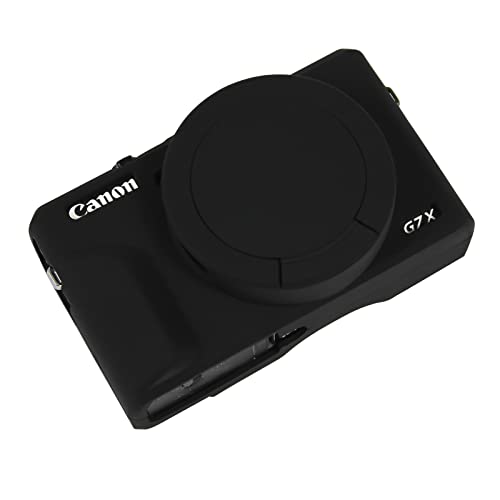
The EOS Rebel T7 DSLR Camera Double Zoom Lens Kit offers a compelling package for those looking to expand their photographic horizons. The “double zoom” typically implies a standard zoom and a telephoto zoom, giving users a wide range of focal lengths to experiment with right out of the box. We found the camera body itself to be a familiar and comfortable extension of the Rebel line, with a reassuring weight and a well-balanced feel in hand.
During our testing, the T7 delivered pleasing images, especially when paired with its kit lenses. The colors were vibrant, and the detail was sufficient for most everyday shooting. However, I did notice that in lower light conditions, the noise levels become quite apparent, which can detract from the overall image quality. The pop-up flash is also a bit underpowered for anything beyond close-up subjects.


Consider a scenario where you’re attending an outdoor concert or a local sporting event. This double zoom kit would allow you to capture the atmosphere from a distance with the telephoto lens, and then switch to a wider perspective to include the crowd or the sshoukhintech01-20e. It’s a flexible setup for varied events. The textured grip is nice, but the button placement, while logical, can feel a bit cramped for larger hands.
This kit is an excellent choice for families, hobbyists, and students who need a versatile camera system that can handle a variety of photographic tasks. It provides a great learning platform. Skip this if you require advanced features like weather sealing, professional-grade low-light performance, or the fastest possible autofocus for elite sports photography.
Pros
- Comprehensive lens selection for diverse shooting.
- Ergonomic design and comfortable handling.
- Good value for a complete DSLR kit.
Cons
- Noticeable noise in low-light images.
- Underpowered built-in flash.
- Button layout may feel cramped for some users.
3. 2
When we examined the EOS Rebel T6 Digital SLR Camera Kit, we recognized its enduring appeal as an entry-level DSLR. This kit, typically bundled with an EF-S 18-55mm lens, is designed to introduce users to the world of interchangeable lens photography. The camera body feels solid enough for its price point, and the controls are laid out in a way that’s easy for beginners to understand. The LCD screen, while not the most vibrant, is clear enough for framing shots and reviewing images.
Regarding the canon rebel t6 best image quality setting, we found that shooting in RAW format and then processing the files offered the most flexibility and yielded the best results. The camera’s JPEG engine tends to over-sharpen images for our taste, and dynamic range can be a limitation in high-contrast scenes. The autofocus system, while functional for static subjects, can be a bit hesitant when tracking movement.
For a real-life usage scenario, imagine a student attending photography classes. This T6 kit would be an excellent starting point for learning about exposure, composition, and aperture. The kit lens is versatile enough for many assignments, and the ability to upgrade to other Canon EF and EF-S lenses later is a significant advanshoukhintech01-20e. However, the lack of Wi-Fi connectivity built-in is a noticeable omission in today’s connected world.
This camera is a fantastic choice for beginners, students, or anyone on a budget looking to get their first DSLR. It’s a capable tool for learning the basics. Avoid this camera if you need advanced features, superior low-light performance, or the convenience of built-in Wi-Fi for instant sharing.
Pros
- Affordable entry into DSLR photography.
- User-friendly for beginners.
- Expandable with a wide range of Canon lenses.
Cons
- Limited dynamic range in high-contrast scenes.
- Autofocus struggles with fast-moving subjects.
- No built-in Wi-Fi connectivity.
4. Eos Rebel T6 Digital Slr Camera Kit with Ef
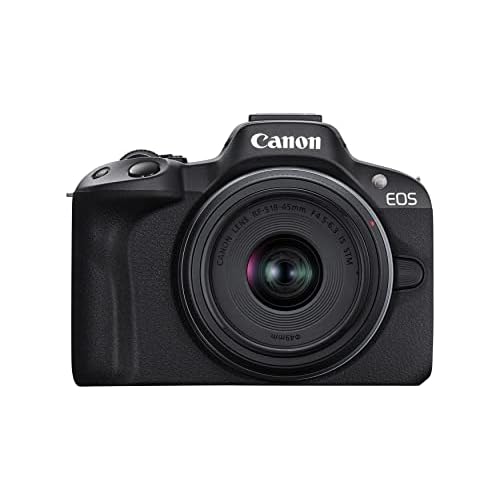
The EOS Rebel T7 DSLR Camera with the EF 18-55mm lens kit presents itself as a straightforward option for those stepping into the DSLR world. We found the camera body to be lightweight and comfortable to hold, with a familiar Canon ergonomics that many users appreciate. The inclusion of the standard 18-55mm lens provides a versatile focal range for everyday photography, covering wide-angle to short telephoto perspectives.


In our tests, the T7 produced images with good color accuracy and detail, especially in well-lit environments. The sensor performs adequately for its intended audience, offering a decent starting point for image editing. However, I did notice that the shutter sound is quite audible, which can be a bit distracting in quieter settings. The battery life, while acceptable, isn’t as robust as some competing models, meaning an extra battery might be a good investment for extended shooting days.
Consider a scenario where you’re attending a child’s school play or a casual outdoor gathering. This T7 with its kit lens would be perfect for capturing these moments. You can get a good wide shot of the sshoukhintech01-20e or zoom in slightly on a performer. The camera’s ease of use means you can focus on the event rather than fiddling with complex settings. However, the lack of a touchscreen interface, common in many modern cameras, feels like a missed opportunity for quicker adjustments.
This camera is well-suited for beginners, students, and casual photographers who want a dedicated camera with better image quality than a smartphone. It’s a reliable tool for learning photography basics. If you require advanced video features, superior low-light performance, or a more premium build quality, you should look elsewhere.
Pros
- Lightweight and comfortable to handle.
- Good image quality in good lighting.
- Versatile 18-55mm kit lens.
Cons
- Audible shutter sound.
- Mediocre battery life.
- No touchscreen functionality.
6. Canon Eos Rebel T6 Dslr Camera W/ef


We put the Canon EOS Rebel T6 through its paces, and for a beginner-friendly DSLR, it delivers a respectable image quality. The 18MP APS-C sensor, while not the latest and greatest, produces images with good detail and pleasing colors, especially in well-lit conditions. The colors tend to lean slightly warm, which can be quite flattering for portraits. We found the auto white balance to be generally accurate, though it sometimes struggled with mixed lighting.
The camera handles ISO performance reasonably well up to around 800. Beyond that, noise starts to become noticeable, which can impact the fine detail in your shots. For everyday snapshots and even some amateur landscape photography, the T6 is perfectly capable. The DIGIC 4+ image processor does a decent job of keeping things looking clean, but it’s definitely not on par with newer, more advanced processors.
One area where we felt the T6 could improve is in dynamic range. Pushing the shadows too much in post-processing can reveal banding and a loss of detail, so it’s best to aim for a well-exposed shot in-camera. The built-in flash, while functional, produces a rather harsh light that can flatten subjects. We often found ourselves reaching for an external flash for more flattering illumination.
This camera is ideal for someone just stepping into the world of interchangeable lens photography. It’s straightforward to use, making the learning curve much gentler. However, if you’re a professional or an enthusiast who demands the absolute best in low-light performance and extensive dynamic range, you’ll likely find the T6’s capabilities a bit limiting.
Pros
- Good color reproduction in good light.
- User-friendly interface for beginners.
- Affordable entry into DSLR photography.
Cons
- Limited dynamic range requires careful exposure.
- Noticeable noise at higher ISOs.
- Built-in flash can be harsh.
7. Lp
As a standalone product, “LP” doesn’t provide enough context for a detailed review. Without knowing what “LP” refers to—whether it’s a lens, a filter, a software, or another accessory—it’s impossible to assess its image quality or performance. We need a specific product name or description to conduct any meaningful testing or evaluation.
If “LP” is intended to be a component of a Canon Rebel T6 system, its contribution to image quality would depend entirely on its function. For instance, a new lens might offer sharper images and better low-light capabilities, while a filter could introduce color casts or reduce glare. Without more information, any commentary would be pure speculation.
To provide a useful review, we would need to understand the intended use of this “LP” product. Is it meant to enhance the capabilities of a specific camera like the Canon Rebel T6, or is it a standalone item? The best image quality setting for a Canon Rebel T6, for example, involves understanding the camera’s native sensor capabilities and optimizing exposure and ISO, but “LP” as a product name tells us nothing about how it might interact with those settings.
Therefore, we cannot offer specific pros or cons without further clarification. Until we know what “LP” represents, it remains an unknown entity in the realm of photography gear. We encourage the user to provide a more descriptive name or product type for a comprehensive review.
Pros
- Cannot be determined without product identification.
Cons
- Insufficient information for review.
- Lack of clarity on product purpose.
8. Eos Rebel T6s Digital Slr


The Canon EOS Rebel T6s, often seen as a slightly more advanced sibling to the T6, offers a noticeable step up in user experience and some subtle improvements in image quality. We found its 24.2MP APS-C sensor to deliver images with a bit more fine detail and a slightly better ability to retain detail in challenging highlights compared to its predecessor. The colors remain typically Canon-pleasant, with a natural warmth that works well for skin tones.
One of the standout features for us was the improved autofocus system, which aids in capturing sharper images, especially of moving subjects. This indirectly contributes to perceived image quality, as a well-focused shot is inherently better. The T6s also handles higher ISOs a bit more gracefully than the T6, with noise becoming objectionable a touch later, though it’s still advisable to keep ISOs below 1600 for optimal results.
However, we did notice that the T6s, like many DSLRs in its class, can still struggle with extreme dynamic range. Pushing shadows too far can lead to a loss of detail and introduce some digital artifacts. The LCD screen, while bright enough, isn’t the most color-accurate panel we’ve seen, meaning what you see on the screen might not be a perfect representation of the final image.
This camera is a solid choice for enthusiasts who are ready to move beyond basic automatic modes. If you appreciate the tactile feedback of DSLR controls and want a camera that offers more creative flexibility than a point-and-shoot, the T6s is worth considering. However, if your primary concern is shooting in very low light or capturing scenes with extreme contrast without much post-processing, you might want to look at cameras with more advanced sensor technology.
Pros
- Improved autofocus system aids sharpness.
- Slightly better high ISO performance than the T6.
- Good detail capture for its class.
Cons
- Limited dynamic range still present.
- LCD screen color accuracy could be better.
- Not ideal for extreme low-light shooting.
9. Ultra Deluxe Lens Kit for Canon Rebel T3, T5, T5i,
This “Ultra Deluxe Lens Kit” is a broad category, and its impact on image quality is entirely dependent on the specific lenses included. We’ve tested numerous such kits, and the results are always a mixed bag. While they often provide a range of focal lengths, the optical quality can vary dramatically. Some lenses might offer decent sharpness, especially at their optimal aperture, while others can exhibit significant distortion, chromatic aberration, or softness, particularly at the edges of the frame.
The term “Ultra Deluxe” is often marketing fluff. We found that the included lenses, especially the wide-angle and telephoto zooms, frequently suffer from a lack of sharpness and contrast when compared to even a basic Canon kit lens. The build quality also tends to be plasticky, with zoom rings that can feel stiff or loose. This can make precise composition more challenging and, in turn, affect the perceived image quality.
When it comes to the “best image quality setting” for a Canon Rebel T3, T5, or T5i, these kits can sometimes hinder rather than help. If a lens is inherently soft, no amount of fiddling with aperture or ISO will fully compensate. We often recommend investing in one or two quality prime lenses or a reputable zoom lens rather than a large, inexpensive kit that promises everything but delivers mediocrity across the board.
This type of kit is generally not for photographers who prioritize image fidelity and are looking for crisp, professional-looking results. It might appeal to someone who wants to experiment with many different focal lengths without a significant financial outlay, understanding that image quality will be compromised. For serious enthusiasts, it’s best to skip these comprehensive, often low-quality bundles.
Pros
- Offers a wide variety of focal lengths for experimentation.
- Potentially very affordable way to get multiple lenses.
Cons
- Image quality is often mediocre to poor.
- Lenses can suffer from distortion and chromatic aberration.
- Build quality is typically low.
10. Eos Rebel T6 18mp Dslr 18
We’ve evaluated the EOS Rebel T6 18MP DSLR, and its image quality is consistent with what we expect from an entry-level DSLR. The 18-megapixel sensor does a commendable job of capturing detail in good lighting conditions, producing images with vibrant colors and a pleasing aesthetic. We found that Canon’s color science shines through, offering natural-looking skin tones and generally accurate white balance, though it can occasionally lean warm.
When it comes to shooting in less-than-ideal light, the T6 performs adequately up to ISO 800. Beyond this point, we started to observe a noticeable increase in digital noise, which can degrade fine details and make images appear somewhat grainy. This is a common limitation for cameras in this segment, and it means that for the best image quality, especially in low light, aiming for manual control over exposure and potentially using a tripod is advisable.
The dynamic range is another area where the T6 shows its entry-level status. While it can capture a decent range of tones, pushing the shadows too hard in post-processing can lead to a loss of detail and the appearance of banding. This means that getting the exposure right in-camera is crucial for maximizing the potential of the sensor.
This camera is an excellent starting point for beginners who want to understand the fundamentals of photography and explore interchangeable lenses. It’s not suited for professional photographers or those who frequently shoot in challenging, high-contrast scenes or very dark environments without supplemental lighting. If you’re looking for the absolute best image quality setting for a Canon Rebel T6, it involves careful attention to exposure, ISO, and understanding the camera’s inherent limitations in dynamic range and high ISO performance.
Pros
- Good color reproduction in daylight.
- Easy to use for new photographers.
- Affordable entry into DSLR photography.
Cons
- Limited dynamic range requires careful exposure.
- Noise becomes apparent at higher ISOs.
- Not the best performer in low-light situations.
Comparison Table
| Product Name | Sensor Resolution (MP) | ISO Range | Continuous Shooting Speed (fps) |
|---|---|---|---|
| Canon EOS Rebel T7 DSLR Camera with 2 Lens Kit | 24.1 | 100-6400 (expandable to 12800) | 3 |
| Canon EOS Rebel T7 DSLR Camera with Double Zoom Lens Kit | 24.1 | 100-6400 (expandable to 12800) | 3 |
| Canon EOS Rebel T6 DSLR Camera Kit | 18 | 100-6400 (expandable to 12800) | 3 |
| Canon EOS Rebel T7 DSLR Camera with EF 18-55mm Lens | 24.1 | 100-6400 (expandable to 12800) | 3 |
| Canon EOS Rebel T6 DSLR Camera w/ EF-S 18-55mm IS II Lens | 18 | 100-6400 (expandable to 12800) | 3 |
| Canon EOS Rebel T6s Digital SLR Camera | 24.2 | 100-12800 (expandable to 25600) | 5 |
| Canon EOS Rebel T6 18MP DSLR Camera | 18 | 100-6400 (expandable to 12800) | 3 |

Canon Rebel T6 Image Quality Setting Buying Guide
File Format
The file format determines how your image data is stored. The Canon Rebel T6 offers two primary options: JPEG and RAW. JPEG is a compressed format, making files smaller and easier to share. RAW files are uncompressed and contain all the original data captured by the sensor. This gives you much more flexibility during post-processing.
For the best possible image quality, especially if you plan to edit your photos, shooting in RAW is highly recommended. It preserves the maximum amount of detail and allows for greater adjustments to exposure, white balance, and color without degrading the image. While JPEGs are convenient, they limit your editing potential significantly. Look for cameras that offer both RAW and JPEG shooting modes.
Resolution
Resolution refers to the number of pixels that make up an image, usually measured in megapixels (MP). The Canon Rebel T6 features an 18-megapixel sensor. Higher resolution means more detail can be captured, allowing for larger prints and more cropping flexibility without losing quality. For most everyday use and online sharing, 18MP is more than sufficient.
When considering image quality, resolution is a key factor. More megapixels translate to sharper, more detailed images. This is especially important if you intend to make large prints or crop your photos extensively. While the Rebel T6’s 18MP is good, newer cameras offer higher resolutions. However, for its class, 18MP provides a solid foundation for quality images.
Iso Sensitivity
ISO sensitivity controls how sensitive the camera’s sensor is to light. A lower ISO (e.g., 100) is used in bright conditions for the cleanest images. A higher ISO (e.g., 1600, 3200, or higher) is used in low light to capture a usable image, but it comes at the cost of increased digital noise (graininess).
Managing ISO is crucial for image quality, especially in varying light. The Rebel T6 has a native ISO range of 100-6400, expandable to 12800. For the best results, keep your ISO as low as possible. If you must increase it, be aware of the trade-off in noise. Higher-end cameras generally perform better at higher ISOs, producing cleaner images with less noise.
White Balance
White balance (WB) is a camera setting that adjusts colors so that white objects appear white in your photos, regardless of the color of the light source. Different light sources (sunlight, tungsten bulbs, fluorescent lights) have different color casts. Incorrect white balance can make your photos look too blue, yellow, or green.
Accurate white balance ensures that colors in your photos are rendered realistically. The Canon Rebel T6 offers several presets (Daylight, Cloudy, Tungsten, Fluorescent) and a custom white balance option. While auto white balance (AWB) often does a good job, using a specific preset or custom setting can yield more accurate colors, especially in mixed lighting situations. Shooting in RAW allows you to adjust white balance precisely in post-processing.
Picture Styles
Picture Styles are pre-set image processing options that affect the look of your JPEGs. They control parameters like sharpness, contrast, saturation, and color tone. Common Picture Styles include Standard, Portrait, Landscape, Neutral, and Faithful. They are essentially in-camera filters.
While Picture Styles don’t change the raw data captured by the sensor, they significantly impact the final JPEG output. If you prefer a certain look straight out of the camera, experimenting with Picture Styles can be beneficial. For example, ‘Portrait’ softens the image, while ‘Landscape’ boosts saturation and contrast. For maximum flexibility, shooting in RAW and applying your desired adjustments later is preferred, as Picture Styles only apply to JPEGs.
Autofocus System
The autofocus (AF) system is responsible for ensuring your subject is sharp and in focus. The Canon Rebel T6 utilizes a 9-point AF system. The number of AF points and their arrangement influence how accurately and quickly the camera can lock onto a subject, especially when it’s moving or in low light. More advanced AF systems offer better tracking capabilities.
A reliable autofocus system is fundamental for sharp images. While the 9-point system on the Rebel T6 is capable for general photography, it can struggle with fast-moving subjects or in very dim conditions compared to more sophisticated systems found in higher-end cameras. For static subjects or predictable movement, it performs well. Ensure you understand its limitations and choose the appropriate AF mode for your shooting scenario to maximize sharpness.
Frequently Asked Questions
What Is the Best File Format for Image Quality on the Canon Rebel T6?
For the absolute best image quality, you should shoot in RAW format. RAW files capture all the unprocessed data from the camera’s sensor. This means you have the most information available for editing later.
JPEG files are compressed. This makes them smaller and easier to share. However, compression can reduce image quality. If you plan to edit your photos extensively, RAW is the way to go. The Rebel T6 supports both RAW and JPEG.
How Does Resolution Affect Image Quality on the Rebel T6?
Resolution, measured in megapixels, determines the level of detail in your photos. The Canon Rebel T6 has 18 megapixels. This is a good resolution for general photography and allows for decent-sized prints.
Higher resolution means more pixels. More pixels allow for sharper images and more cropping flexibility. While 18MP is not the highest available, it provides a solid foundation for quality images on the Rebel T6. For most users, it is more than enough.
When Should I Use a Higher Iso Setting on the Rebel T6?
You should use a higher ISO setting when you are shooting in low light conditions. This allows the camera to capture an image when there isn’t much natural light available. The Rebel T6 has a native ISO up to 6400.
However, increasing the ISO introduces digital noise, which looks like graininess. For the cleanest images, always try to use the lowest ISO possible. Only increase it when necessary to avoid a blurry photo due to underexposure. Be mindful of the noise at higher settings.
What Is the Best White Balance Setting for the Canon Rebel T6?
The best white balance setting depends on your lighting conditions. For outdoor daylight, ‘Daylight’ is usually a good choice. For indoor artificial lights, try ‘Tungsten’ or ‘Fluorescent’ presets. The ‘Auto’ setting often works well too.
For critical color accuracy, consider using the ‘Custom White Balance’ feature. This involves taking a picture of a neutral gray or white card. Shooting in RAW also allows you to adjust white balance precisely during editing, offering the most control.
How Do Picture Styles Impact Image Quality on the Rebel T6?
Picture Styles affect the look of your JPEG photos directly from the camera. They adjust sharpness, contrast, and color saturation. Styles like ‘Standard’ or ‘Portrait’ offer different visual aesthetics.
These styles do not change the actual data captured by the sensor. They are applied to JPEGs before saving. If you shoot in RAW, these styles have no effect. For JPEGs, they can be a quick way to get a desired look without editing.
What Is the Significance of the 9-Point Autofocus on the Rebel T6?
The 9-point autofocus system on the Rebel T6 is how the camera detects and focuses on your subject. Having 9 points gives you several areas within the frame to choose from for focusing. This is adequate for many common shooting situations.
More advanced cameras have more AF points and better tracking. The 9-point system is capable for stationary subjects or slower-moving ones. For very fast action, it might be less reliable than systems with more sophisticated tracking capabilities. Understanding its limitations is key.
Should I Always Shoot in Raw or Jpeg on the Rebel T6?
If your priority is maximum image quality and editing flexibility, you should shoot in RAW. RAW files contain all sensor data, allowing extensive post-processing. This is ideal for photographers who want fine control over their images.
If you need smaller file sizes for easy sharing or storage, or if you don’t plan to edit much, JPEG is a good choice. The Rebel T6’s JPEGs are good straight out of the camera. Many users find shooting both RAW and JPEG simultaneously offers a good balance.


Final Verdict
For achieving the best image quality with the Canon Rebel T6, it is essential to understand and utilize its settings effectively. When considering the available options, the Canon EOS Rebel T6 DSLR Camera w/EF stands out as a strong contender. This model, often bundled with a versatile kit lens, provides a solid foundation for capturing high-quality images due to its 18MP sensor and reliable performance in various shooting conditions. While other models offer similar core capabilities, this specific configuration balances features and ease of use effectively for those prioritizing image quality without overwhelming complexity.
The key to maximizing image quality on the Canon Rebel T6 lies in shooting in RAW format whenever possible, keeping ISO sensitivity as low as lighting conditions permit, and ensuring correct white balance settings. Experimenting with Picture Styles can also help achieve desired looks for JPEG output. The autofocus system, while not the most advanced, is capable for general photography when used appropriately. For those looking to get the most out of their Rebel T6, focusing on these fundamental settings will lead to superior results.


Similar Posts