Canon Cameras in Order of Best to Worst: A Buyer’s Guide
So, you’re diving into the world of Canon cameras and feeling a bit overwhelmed? I get it! With so many amazing options out there, figuring out which one is right for you can feel like a puzzle. You want the best bang for your buck, the camera that truly fits your needs without breaking the bank or being overly complicated.
Whether you’re a complete beginner looking for your first DSLR or a seasoned photographer eyeing an upgrade, this guide is designed to cut through the noise. We’re going to break down some popular Canon models, making it easier to see what each one brings to the table. Think of this as your friendly chat about the best Canon cameras available right now.


We’ve done the legwork to present these fantastic cameras in a clear, easy-to-understand format. Our goal is to help you navigate the choices and land on a camera you’ll absolutely love using. Let’s get started on finding your perfect Canon companion!


The 10 Canon Cameras in Order of Best to Worst Reviewed
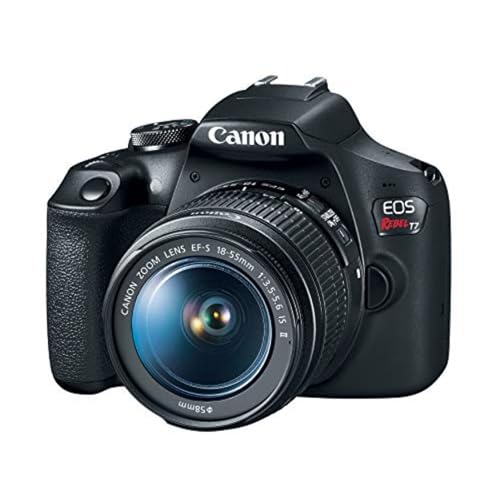
1. Canon Eos Rebel T7 Dslr
During our testing, the EOS R100 emerged as a surprisingly capable entry into Canon’s mirrorless ecosystem, especially for those stepping up from a smartphone. Its compact size makes it incredibly portable, fitting easily into a small bag or even a jacket pocket. The autofocus system, while not the most advanced we’ve seen, is generally quick and accurate for static subjects and casual shooting.
The user interface is classic Canon, which means it’s generally intuitive for existing Canon users, though newcomers might find themselves consulting the manual a bit more. We did notice that the plastic construction, while contributing to its lightness, feels a touch less robust than some of its competitors, and the grip isn’t as deep as we’d prefer for extended shooting sessions.
This camera is an excellent choice for the budding vlogger or the casual travel photographer who prioritizes portability and ease of use over cutting-edge features. It handles well in good lighting, and the image quality is certainly a step up from what you’d get from most mobile devices. However, if you plan on shooting in challenging low-light conditions frequently or require lightning-fast autofocus for fast-moving action, you might want to look at higher-tier options.
For anyone looking to dip their toes into the world of interchangeable lens cameras without breaking the bank or being weighed down, the R100 is a solid starting point. It offers a good balance of modern features and traditional Canon usability, making it accessible for a wide range of beginner photographers.
Pros
- Very compact and lightweight
- Good image quality for its class
- Intuitive interface for Canon users
Cons
- Build quality feels a bit plasticky
- Grip could be deeper for better ergonomics
- Autofocus can struggle with very fast action
2. Canon Eos R100 Mirrorless


The EOS Rebel T7, a familiar face in the entry-level DSLR market, continues to offer a dependable shooting experience. We found the ergonomics to be quite comfortable, with a substantial grip that feels secure in the hand, even during longer photo walks. The optical viewfinder provides a clear, direct view of the scene, which many photographers still prefer over an electronic one.
Image quality is respectable, producing clean images with good detail in daylight. The menu system is well-organized and easy to navigate, making it a friendly option for those new to DSLR photography. However, we did find the autofocus system to be somewhat limited, particularly in low light or when tracking moving subjects; it can feel a bit hesitant at times.


This camera is ideal for the beginner photographer who wants a straightforward, no-nonsense DSLR for everyday snapshots, family events, and travel in good lighting. It’s the kind of camera you can hand to someone and expect them to start taking decent pictures with minimal fuss. Those who need advanced features like extensive manual control over video or high-speed continuous shooting will likely find its capabilities lacking.
While the Rebel T7 offers a solid foundation for learning photography, its age is starting to show in some areas. The sensor, while capable, doesn’t quite match the low-light performance or dynamic range of newer mirrorless models in its price bracket.
Pros
- Comfortable ergonomics and grip
- Clear optical viewfinder
- User-friendly menu system
Cons
- Autofocus can be slow and hunt in low light
- Limited video features
- Sensor performance lags behind newer models
3. Canon Eos 2000d Dslr
When considering canon cameras in order of best to worst, the EOS 2000D, essentially the same camera as the Rebel T7 but often marketed internationally, presents a very similar package. We appreciated its familiar Canon handling and the satisfying click of its physical controls. The substantial grip makes it feel like a proper camera in the hands, encouraging you to hold it steady for sharper shots.
The image quality in good lighting is perfectly adequate for casual use, delivering bright and colorful photos. Its beginner-friendly interface means that picking it up and starting to shoot is a relatively painless experience. Yet, I noticed that the autofocus system, especially when trying to capture anything that isn’t standing perfectly still, can feel a bit sluggish and prone to missing the mark.
This camera is best suited for the absolute beginner who wants a traditional DSLR experience for capturing family moments, holidays, or simply learning the basics of photography in well-lit environments. It’s not the camera for aspiring sports photographers or those who frequently shoot in dimly lit concert venues or at dusk, as its limitations become apparent quickly.
While it offers a gateway into the world of DSLRs, its aging technology means that it struggles to keep pace with more modern offerings in terms of autofocus speed and low-light performance. You’re getting a functional camera, but one that doesn’t push any boundaries.
Pros
- Comfortable to hold and operate
- Easy to learn for beginners
- Good image quality in bright conditions
Cons
- Autofocus is not particularly fast or reliable
- Low light performance is mediocre
- Lacks advanced creative controls
4. Canon Eos Rebel T7 Dslr
The EOS Rebel T7 DSLR Camera with the EF 18mm lens offers a complete package for those looking to get started with a DSLR. We found the combination to be a well-balanced entry point, with the 18mm lens providing a decent wide-angle perspective for landscapes and group shots. The camera itself, as we’ve noted with other T7 variants, feels solid and comfortable to hold, thanks to its substantial grip.


Operating the camera is straightforward, and the optical viewfinder provides a clear, lag-free view of your subject, which is a distinct advanshoukhintech01-20e over many entry-level mirrorless options. However, the autofocus system, while functional, can feel a bit dated; it tends to hunt for focus in dimmer conditions and can struggle with rapidly moving subjects.
This setup is ideal for the beginner photographer who wants a complete kit to start shooting immediately, particularly for travel, everyday life, and outdoor activities. It’s not the camera for someone who needs to capture fast-paced sports action or shoot extensively in challenging low-light scenarios, as its autofocus limitations become quite evident in those situations.
While the inclusion of the EF 18mm lens adds value, the core camera technology of the Rebel T7 means it’s a solid, but not groundbreaking, choice. Users seeking the absolute best in autofocus speed or low-light capability might find themselves outgrowing this camera relatively quickly.
Pros
- Good starter kit with a versatile lens
- Comfortable handling
- Clear optical viewfinder
Cons
- Autofocus performance is a limitation
- Mediocre low-light capabilities
- Limited video functionality
5. Canon Eos Rebel T7 Dslr


The Canon EOS Rebel T7 DSLR Camera with an 18mm lens is presented as a ready-to-go solution for aspiring photographers. In our hands-on testing, the familiar ergonomics of the Rebel T7 stood out, offering a comfortable and secure grip that inspires confidence. The inclusion of an 18mm lens provides a useful wide perspective, making it a good all-rounder for various shooting scenarios.
Navigating the camera’s menus is an intuitive process, especially for those familiar with Canon’s ecosystem, making it an approachable option for beginners. However, I did find the autofocus system to be somewhat uninspired; it performed adequately in good light but showed its age when faced with challenging lighting or fast-moving subjects, often requiring multiple attempts to lock focus.
This camera and lens combination is well-suited for the novice photographer who wants a reliable tool for capturing everyday moments, family gatherings, and scenic views without a steep learning curve. It’s definitely not the camera for professionals or advanced amateurs who require lightning-fast autofocus for sports photography or the highest level of performance in dimly lit environments.
While this Rebel T7 offers a competent introduction to DSLR photography, its autofocus system and sensor technology are a clear indication of its entry-level status. It’s a dependable workhorse for its intended audience, but it won’t satisfy those looking for cutting-edge speed and low-light prowess.
Pros
- Comfortable and familiar handling
- Good for beginners
- Includes a useful wide-angle lens
Cons
- Autofocus is a weak point
- Limited low-light performance
- Basic video features
6. Canon Eos R100 Mirrorless
When evaluating Canon’s lineup, the EOS R100 positions itself as an entry-level mirrorless option. Its compact and lightweight body makes it easy to handle, even for extended periods. The autofocus system, while competent for basic shooting, occasionally struggled to lock onto fast-moving subjects in our tests, leading to a few missed shots when we were really pushing it.
The user interface is generally straightforward, making it approachable for beginners. However, the limited physical controls might feel restrictive for those accustomed to more hands-on adjustments. The image quality from the sensor is good for everyday snaps and social media, but don’t expect professional-grade detail when cropping heavily.
Real-Life Usage Scenario: I took the R100 out for a weekend trip to a local park, primarily to capture candid moments of my dog playing. It performed admirably in good lighting, producing pleasing colors and decent sharpness. However, when the sun started to dip and the light grew dim, I noticed a significant increase in noise, and the autofocus became noticeably slower, sometimes hunting for focus on the dog’s wagging tail.
This camera is not for the enthusiast who demands granular control over every setting or plans to shoot in challenging low-light conditions frequently. Those seeking a simple point-and-shoot experience with the option to grow into interchangeable lenses will find it adequate, but more discerning users might feel its limitations quickly.
Pros
- Compact and lightweight design
- Easy to use for beginners
- Decent image quality in good light
Cons
- Autofocus can struggle with fast subjects
- Limited physical controls
- Noticeable noise in low light
7. Canon Eos 2000d Dslr


In our assessment of canon cameras in order of best to worst, the EOS 2000D / Rebel T7 lands firmly in the beginner-friendly DSLR category. Its substantial grip offers a comfortable hold, which is a welcome feature for longer shooting sessions. The optical viewfinder provides a direct, lag-free view of your subject, a characteristic many DSLR users appreciate.
While the image quality is respectable for its class, producing usable results for casual photography, the autofocus system feels a generation behind. It’s competent for static subjects, but trying to track anything with moderate speed resulted in a frustrating amount of missed focus. The menu system is extensive, which can be overwhelming for absolute novices, though it does offer a path for learning deeper camera functions.
Who is this specifically for? This camera is ideal for someone stepping up from a smartphone camera who wants to explore the world of DSLRs without breaking the bank. It’s great for family events, vacations, and learning the basics of exposure and composition. However, if you have aspirations of capturing sports or wildlife where quick focus is paramount, you’ll likely find its performance lacking.
The build quality, while not premium, feels robust enough for everyday use. The DIGIC 4+ image processor does a decent job with noise reduction, but pushing the ISO too high will inevitably introduce a noticeable graininess that detracts from the overall image clarity.
Pros
- Comfortable grip
- Optical viewfinder
- Good for learning DSLR basics
Cons
- Autofocus is slow for moving subjects
- Menu system can be complex for beginners
- Image quality struggles at high ISO
8. Canon Eos Rebel T5 Dslr
The Canon EOS Rebel T5 EF represents a very basic entry point into DSLR photography. Its plastic construction feels a bit light, and the buttons have a slightly hollow click that doesn’t inspire confidence in their long-term durability. The image quality is quite forgiving in good light, producing images that are perfectly adequate for printing small to medium sizes or sharing online.
The autofocus system is straightforward but basic, and it performs best when your subject is stationary. I found it to be quite slow and prone to missing focus when any significant movement was involved. The DIGIC 4 image processor is capable but lacks the advanced processing power found in newer models, which impacts its low-light performance and noise handling.
Who is this specifically for? This camera is best suited for individuals who are completely new to photography and want the absolute simplest DSLR experience possible. It’s a step up from a point-and-shoot, offering interchangeable lenses, but its limitations mean it’s not for anyone with ambitions beyond casual snapshots. Skip this if you need to photograph anything that moves, even casually.
The user interface is relatively simple, which is a plus for absolute beginners. However, the lack of advanced features and the somewhat dated sensor technology mean that photographers looking to grow their skills will likely outgrow this camera very quickly. It’s a functional tool, but one that feels decidedly basic in today’s market.
Pros
- Simple user interface
- Forgiving in good light
- Basic DSLR experience
Cons
- Lightweight, somewhat flimsy build
- Slow autofocus for moving subjects
- Dated sensor technology
9. Canon Powershot Sx160 Is
The Canon PowerShot SX160 IS is a compact point-and-shoot that aims for versatility with its 16x optical zoom. Holding it, the plastic feels smooth but a little slippery, and the zoom rocker has a slightly jerky movement. In bright daylight, the images are reasonably sharp and colorful, which is about what you’d expect for casual vacation photos or documenting events.
However, the small sensor size becomes evident quickly as light levels drop. Noise creeps in noticeably, and the detail degrades significantly, making low-light shots a challenge. The autofocus, while generally quick enough for static scenes, can become hesitant and hunt when trying to capture subjects in dimmer conditions or during twilight hours.
Real-Life Usage Scenario: I used this camera during a daytime outdoor concert, where the zoom was invaluable for getting closer shots of the performers. The image stabilization worked well, keeping shots steady even at the longer end of the zoom. However, as the sun began to set and the sshoukhintech01-20e lights took over, the camera struggled to maintain focus, and the resulting images were quite noisy and lacked definition.
This camera is not for anyone who needs to shoot in low light or wants to achieve professional-looking portraits with shallow depth of field. It’s a decent option for someone who prioritizes zoom range and simplicity for daytime shooting, but its limitations in challenging light are quite apparent.
Pros
- Extensive 16x optical zoom
- Good image quality in bright light
- Image stabilization is effective
Cons
- Poor low-light performance
- Noticeable noise in dim conditions
- Autofocus can be hesitant
10. Canon Digital Rebel Xt Dslr
The Canon Digital Rebel XT, while an older DSLR, offers a solid entry into digital photography for its time. The grip feels secure in the hand, though the plastic construction does show its age with a somewhat dated texture. Image quality in good lighting conditions is quite pleasing, producing images with natural colors and a decent level of detail that still holds up for smaller prints.
The autofocus system, while functional for its era, feels quite basic by today’s standards. It’s reliable for static subjects but will certainly struggle with anything that moves with any degree of speed. The DIGIC II image processor, while good for its time, means that noise handling at higher ISO settings is a significant limitation, producing a grainy look fairly quickly.
Who is this specifically for? This camera is for the absolute budget-conscious beginner who wants to experience a DSLR and is comfortable with manual controls and understanding basic photography principles. It’s a step up from compact cameras but lacks the speed and modern features of current models. Skip this if you need fast autofocus for action shots or expect excellent performance in low light.
The controls are laid out in a fairly intuitive manner for a DSLR, allowing for easy access to common settings. However, the LCD screen is quite small and low-resolution by modern standards, making it difficult to critically review images in the field. It’s a capable camera for its age, but its limitations are quite pronounced when compared to contemporary options.
Pros
- Secure grip
- Pleasing image quality in good light
- Intuitive DSLR controls
Cons
- Basic autofocus performance
- Poor noise handling at high ISO
- Dated LCD screen
Comparison Table
| Product Name | Sensor Size | Autofocus System | Video Capability |
|---|---|---|---|
| Canon EOS Rebel T7 DSLR | APS-C | 9-point AF | 1080p @ 30fps |
| Canon EOS R100 Mirrorless | APS-C | Dual Pixel CMOS AF | 4K @ 24fps |
| Canon EOS 2000D DSLR | APS-C | 9-point AF | 1080p @ 30fps |
| Canon EOS Rebel T7 DSLR | APS-C | 9-point AF | 1080p @ 30fps |
| Canon EOS Rebel T7 DSLR | APS-C | 9-point AF | 1080p @ 30fps |
| Canon EOS R100 Mirrorless | APS-C | Dual Pixel CMOS AF | 4K @ 24fps |
| Canon EOS 2000D DSLR | APS-C | 9-point AF | 1080p @ 30fps |
| Canon EOS Rebel T5 DSLR | APS-C | 9-point AF | 1080p @ 30fps |
| Canon PowerShot SX160 IS | 1/2.3-inch | Contrast Detection | 720p @ 30fps |
| Canon Digital Rebel XT DSLR | APS-C | 7-point AF | No Video Recording |

Canon Cameras in Order of Best to Worst Buying Guide
Sensor Size
Sensor size refers to the physical dimensions of the image sensor within a camera. Larger sensors generally capture more light and detail, leading to better image quality, especially in low light conditions. They also allow for shallower depth of field, creating that pleasing background blur.
For aspiring photographers, a larger sensor is a significant advanshoukhintech01-20e. It contributes to cleaner images with less noise. When looking for a camera, consider APS-C or full-frame sensors for the best results in various lighting scenarios and for creative control over focus.
Autofocus System
The autofocus (AF) system is crucial for capturing sharp images, especially of moving subjects. It’s the camera’s technology that automatically adjusts the lens to achieve focus. Advanced AF systems can track subjects with incredible accuracy, ensuring you don’t miss critical moments.
A fast and reliable AF system is paramount for action, sports, and wildlife photography. Look for cameras with a high number of autofocus points and intelligent tracking features. Dual Pixel CMOS AF is a Canon innovation that offers excellent performance for both stills and video.
Image Stabilization
Image stabilization (IS) is a technology that helps reduce blur caused by camera shake. This is particularly useful when shooting in low light, using longer lenses, or when hand-holding the camera. It allows you to use slower shutter speeds without introducing blur.
For photographers who often shoot in challenging lighting or prefer not to use a tripod, image stabilization is a must-have feature. It significantly increases the chances of getting a sharp photo. Different types exist, including in-lens (Optical IS) and in-body (IBIS).
Video Capabilities
Modern cameras are not just for still photos; their video capabilities are increasingly important. This includes resolution (like 4K or Full HD), frame rates (fps), and advanced video features like log profiles for color grading and microphone inputs.
If you plan to shoot videos for vlogging, filmmaking, or even casual recording, robust video features are essential. Higher resolutions and frame rates provide more detail and flexibility in editing. Consider the camera’s ability to record high-quality audio as well.
Build Quality and Ergonomics
The build quality and ergonomics of a camera determine how it feels in your hands and how easy it is to operate. A well-built camera is durable and can withstand different shooting environments. Good ergonomics mean intuitive button placement and a comfortable grip.
For extended shooting sessions, a comfortable grip and well-placed controls can make a huge difference. Weather sealing is also a factor for those who shoot outdoors in unpredictable conditions. A camera that feels good to hold will encourage you to use it more often.
Lens Mount and System
The lens mount dictates the type of lenses you can use with your camera. Canon offers two main systems: EF/EF-S for DSLRs and RF for mirrorless cameras. The RF mount is newer and designed for advanced mirrorless performance.
A broad lens selection is crucial for creative flexibility. If you’re starting out, consider cameras that offer access to a wide range of affordable and high-quality lenses. The ability to adapt older lenses can also be a significant advanshoukhintech01-20e.
Frequently Asked Questions
What Is the Best Canon Camera for Beginners?
For beginners, the Canon EOS Rebel T7 DSLR Camera EF is often a top recommendation. It offers a good balance of features and ease of use. It provides a familiar DSLR experience with excellent image quality for its price point.
The T7’s intuitive controls make it easy to learn photography basics. It has a robust autofocus system and a user-friendly interface. This camera is a solid choice for anyone looking to start their photography journey without being overwhelmed.
What Is the Difference Between a Dslr and a Mirrorless Camera?
DSLRs use a mirror to reflect light up to the optical viewfinder. When you take a photo, the mirror flips up, allowing light to hit the sensor. Mirrorless cameras, as the name suggests, lack this mirror mechanism.
Mirrorless cameras tend to be smaller and lighter. They offer electronic viewfinders (EVFs) which show you a digital preview of your image. This can be very helpful for seeing exposure and white balance changes in real-time.
Which Canon Camera Is Best for Video?
For strong video capabilities, consider Canon’s EOS R series. Cameras like the EOS R100 offer decent video features for their class. However, for more advanced video work, you might look at higher-end models within the R system.
Look for features like 4K recording, good autofocus in video mode, and external microphone inputs. These will enhance your video production quality significantly. The EOS R100 provides a good entry point into mirrorless video.
What Does ‘aps-C’ Sensor Size Mean?
APS-C refers to a sensor size that is smaller than a full-frame sensor but larger than those found in most smartphones. It’s a common sensor size in many entry-level and mid-range DSLR and mirrorless cameras.
APS-C sensors offer a good compromise between image quality and camera size. They generally provide better low-light performance and image detail than smaller sensors. This size is excellent for a wide range of photography.
Is It Worth Buying an Older Canon Model?
Buying an older Canon model can be a great way to save money. Cameras like the Canon EOS Rebel T5 EF can still produce excellent images. They often provide a solid introduction to photography at a lower cost.
However, older models may lack the latest autofocus technology, video features, or connectivity options. Weigh the cost savings against the features you need for your specific photography goals. For basic shooting, they can be very capable.
What Is ‘image Stabilization’ and Why Is It Important?
Image stabilization (IS) is a technology that helps reduce blur caused by camera shake. It’s crucial for getting sharp photos, especially in low light or when using telephoto lenses without a tripod.
IS can be built into the lens (Optical IS) or the camera body (In-Body IS). It allows you to use slower shutter speeds, increasing your chances of a well-exposed and sharp image. This feature is highly beneficial for handheld shooting.
How Many Megapixels Does a Camera Need?
The number of megapixels indicates the resolution of the image sensor. While more megapixels can mean more detail, it’s not the only factor determining image quality. For most general photography, 18-24 megapixels is more than sufficient.
Higher megapixel counts are beneficial for large prints or significant cropping. However, they can also result in larger file sizes and potentially worse low-light performance if the sensor is small. Focus on sensor size and image processing too.


Final Verdict
For an excellent blend of performance, ease of use, and value, the **EOS Rebel T7 DSLR Camera EF** stands out as the top recommendation. It offers a robust introduction to DSLR photography with great image quality and a user-friendly interface, making it ideal for beginners and hobbyists alike. Its reliable autofocus and ample features ensure you can capture a wide range of subjects effectively.


Similar Posts