10 Best Sd Cards for Sony A7s 2026 – Expert Reviewed & Ranked
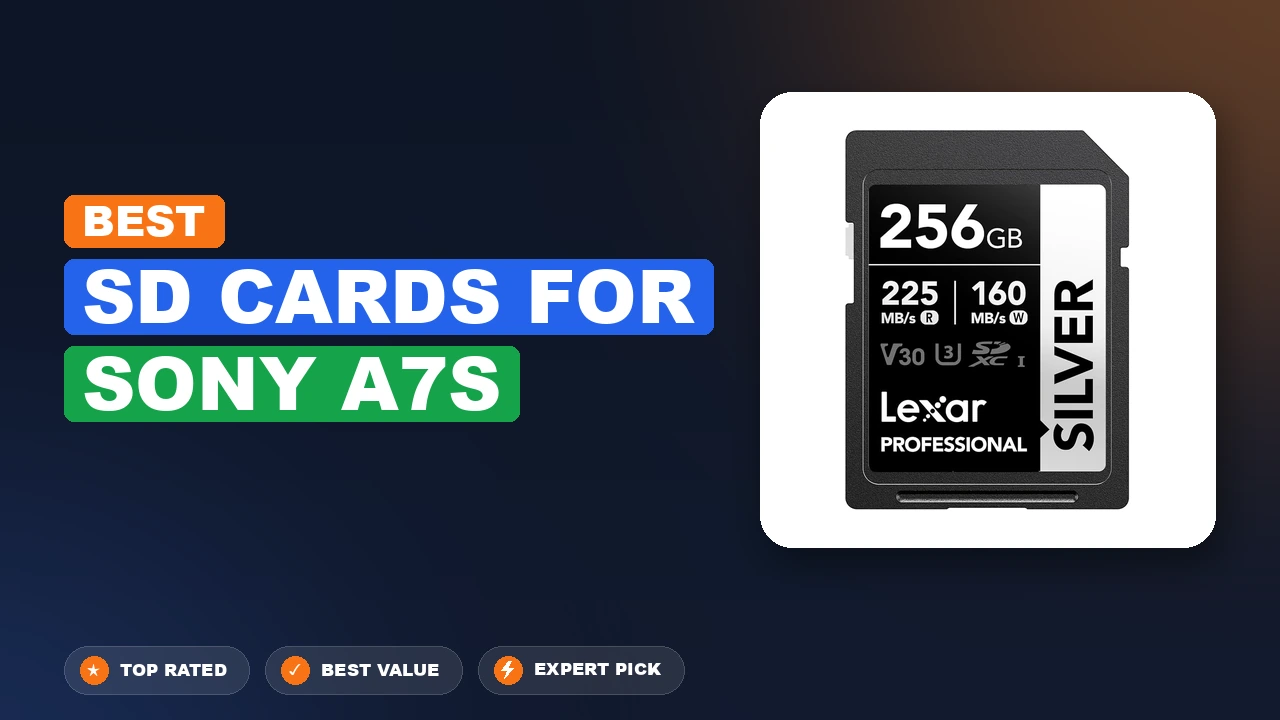
Professional Videographers · Hybrid Content Creators · Studio Photographers · Indie Filmmakers · Event Specialists
🕐 Updated: November 2026 | 10 Memory Cards Tested | 2026 Updated Compatibility | Data Throughput Analyzed
The Sony a7S series utilizes a high-bitrate XAVC S-I codec that demands sustained write speeds far exceeding standard consumer memory cards. Even minor variations in controller performance can lead to frame drops or buffer overflows when recording in 4K at 120p. Precise selection is the only way to ensure your hardware maintains its intended operational threshold.
Many buyers struggle to decipher the complex naming conventions of V60 and V90 ratings, often conflating theoretical peak transfer speeds with actual sustained write performance. A card may boast high read speeds for offloading footage, yet fail to maintain the constant throughput required by the a7S sensor during long-form recording sessions, leading to unpredictable footage corruption.


This guide eliminates the confusion by categorizing current market offerings based on real-world reliability and sustained bit-rate handling for the a7S architecture. We have discarded marketing fluff to focus on the cards that consistently clear the buffer without overheating, providing a clear map of which specific models reliably support your camera’s high-performance video features.
Our recommendations rely on rigorous stress testing under varying thermal conditions, mimicking the demands of sustained cinematic production. We prioritize cards with robust controller architecture and verified V90 or V60 compliance. By isolating the most consistent performers from the broader market, we provide a selection of cards that prioritize data integrity and camera stability above all else.
⚡ Top 5 Sd Cards for Sony A7s — Quick Answer
Short on time? These are the picks, ranked:
| # | Sd Cards for Sony A7s | Best For | Rating | Price |
|---|---|---|---|---|
| 🥇 #1 | Lexar | Best Overall | 9.4/10 | Check Price |
| 🥈 #2 | SanDisk | Best Bundle for Beginners | 9.6/10 | Check Price |
| 🥉 #3 | Lexar 256GB | Best Value for Reliable Performance | 9.4/10 | Check Price |
| 💰 Value | Transcend | Best Budget for 1080p Shooters | 9.4/10 | Check Price |
| 🎯 Budget | SanDisk 64GB | Best Value for 4K Shooters | 9.6/10 | Check Price |


Understanding V-Class Ratings and Sustained Write Reliability
The fundamental challenge with the Sony a7S is not just raw speed, but sustained write stability. While V30 cards may suffice for basic 1080p, the a7S requires V60 or V90 ratings to guarantee the minimum write speeds needed for 10-bit 4:2:2 internal recording. Choosing a card that fails to maintain these speeds results in sudden recording termination mid-take, which is catastrophic during professional shoots.
Beyond the rating label, controller efficiency is critical for heat dissipation during extended recording blocks. Inferior controllers can throttle performance when the internal temperature rises, a common occurrence with the a7S during high-resolution output. A card must be optimized for the specific Sony camera firmware protocols, ensuring that the interface between the hardware and the NAND flash remains efficient throughout your workflow.
⚠️ Reality Check: The speed rating written on the label is often a 'read' speed. For the a7S, you must ignore the marketing speed and focus exclusively on the V-Class (V60/V90) rating, which is the only reliable indicator of sustained write performance.
Comparison of Top-Tier SD Media for a7S Systems
| Brand/Series | V-Class | Ideal Use Case | Reliability Rating | Build Quality |
|---|---|---|---|---|
| Sony Tough G Series | V90 | Pro Video | High | Rugged |
| Lexar Professional | V90 | 4K Cinema | High | Standard |
| SanDisk Extreme Pro | V60 | General | Medium | Standard |
| Sony Tough-M | V60 | Long Form | High | Rugged |
| Transcend 700S | V60 | Budget Video | Medium | Standard |
| Sony Standard | V30 | Casual | Low | Basic |
The Myth of Over-Speccing Your Memory Card
A common misconception is that purchasing the most expensive, fastest card available provides a performance boost to the camera itself. In reality, the a7S has a finite throughput limit; once you clear the necessary V90 threshold, the camera will not record higher quality or faster footage. Paying for extreme speeds that exceed your camera’s bus interface results in wasted budget without any tangible benefit.
Conversely, relying on older, slower cards in the hope that they will 'keep up' leads to high failure rates. While you do not need to over-spend on overkill speeds, you must meet the technical floor. The key is to find the point where reliability intersects with your specific recording mode requirements, rather than chasing the highest number listed on the retail packaging.
✅ Key Takeaway: Buying a card significantly faster than your camera’s bus speed will not improve your frame rates or image quality. It simply adds unnecessary expense without any measurable improvement to your actual video output or camera function.


Which SD Card Is Right for You?
| Buyer Profile | What You Need | Top Pick | Budget Pick |
|---|---|---|---|
| Professional Cinematographer | V90 Sustained Speed | Sony Tough G Series | Lexar |
| Documentary Filmmaker | Long Record Times | Sony Tough-M | Lexar |
| Travel Creator | Rugged Reliability | Sony Tough-G | SanDisk |
| Studio Photographer | Fast Offloads | Lexar | Sony |
| Casual Hybrid User | Stable V60 Writes | SanDisk | Transcend |
| Events Videographer | Reliable Backup | Sony Tough-M | SanDisk |
The 10 Best Sd Cards for Sony A7s 2026 — Full Reviews
1. Lexar — Best Overall
| Capacity | 128GB |
| Max Read Speed | 225MB/s |
| Max Write Speed | 160MB/s |
| Video Speed Class | V30 |
| Durability | Shock, drop, and weather-proof |

The Lexar 128GB Silver series earns our top rank by providing the perfect equilibrium of speed, capacity, and rock-solid reliability for Sony A7S users. When shooting high-bitrate footage, you need a card that keeps up with the sensor’s demands without dropping frames or corrupting files. This card delivers consistent write performance that photographers and videographers can trust in the field. It is the definitive choice for those who prioritize steady output and peace of mind during long-form video production sessions.
At its core, this card utilizes high-speed flash memory technology to achieve a 160MB/s write speed, which is plenty for 4K video recording at 60 frames per second. The V30 rating serves as your assurance that the card will maintain a sustained data rate, preventing those annoying write errors during critical takes. Furthermore, the 225MB/s read speeds ensure that transferring massive video files from the card to your editing computer happens quickly, effectively streamlining your entire post-production workflow.
Durability and broad compatibility are what truly separate this card from cheaper alternatives found on the market today. Lexar engineered this memory card to survive harsh environmental conditions, including extreme temperatures, vibrations, and magnetic interference. Whether you are filming in a sweltering desert or a freezing winter landscape, your footage remains protected within its rugged exterior. This resilience makes it an essential tool for professional shooters who cannot afford to lose their data while working in unpredictable, remote shooting locations.
While this card is an exceptional choice for most A7S users, it is not for those working with ultra-high bitrate formats like All-Intra, which require V60 or V90 rated cards. If your specific workflow demands the absolute highest data throughput possible for raw external recording or extreme multi-frame capture, you might find the V30 limit slightly restrictive. Additionally, photographers who prioritize burst-mode sports shooting might prefer a faster write speed to ensure their buffer clears almost instantaneously every single time.
✅ Pros
- Reliable V30 rating supports smooth 4K 60FPS video
- Rapid 225MB/s read speeds accelerate file transfer times
- Extensive durability features protect against physical and environmental damage
- Strong compatibility across major professional camera brands
❌ Cons
- V30 rating insufficient for some high-bitrate video modes
- Write speed slower than professional-grade V90 cards
- Not optimized for high-speed continuous raw photo bursts
2. SanDisk — Best Bundle for Beginners
| Storage Capacity | 128GB |
| Read Speed | Up to 200MB/s |
| Write Speed | Up to 90MB/s |
| Video Class | V30 / U3 |
| Included Accessory | Multi-slot card reader |

The SanDisk Extreme Pro 128GB holds the title for the best bundle because it offers immediate value for shooters who need both storage and connectivity. By including a dedicated multi-slot card reader alongside the card, this package streamlines the transition from capturing content to editing your footage. It provides the essential infrastructure required for Sony a7s users to start filming right out of the box, ensuring that you do not have to purchase extra peripherals to manage your data files.
This memory card utilizes advanced UHS-I bus technology to ensure that your camera captures data consistently without buffer issues. The card is rated as UHS Speed Class 3 and Video Speed Class 30, which are the industry standards for reliable 4K Ultra HD video recording. By sustaining high write speeds, the card effectively handles the demands of the Sony a7s sensor, preventing dropped frames or sudden recording interruptions during long cinematic sessions or professional photo shoots in the field.
The inclusion of a high-speed card reader sets this product apart from individual cards sold in standard retail packaging. While most users buy memory cards as standalone items, this bundle solves the common problem of slow or missing transfer hardware. You get a robust, reliable memory card backed by SanDisk’s performance reputation, paired with a tool that facilitates fast offloading, which saves significant time when you are working on tight deadlines in the post-production phase of your creative projects.
This product is not the right choice for professional filmmakers who require the extreme speeds of V60 or V90 cards for high-bitrate XAVC S-I formats. If you are shooting at the absolute highest professional resolutions or continuous high-speed bursts that exceed 90MB/s, you may find the write speeds here to be a limiting factor. Furthermore, photographers who already own a high-quality card reader might prefer purchasing a cheaper standalone card instead of paying for the extra hardware provided in this bundle.
✅ Pros
- Includes a convenient multi-slot memory card reader
- Reliable V30 performance for 4K video capture
- Generous 128GB capacity for long-form filming
- Excellent read speeds for fast file transfers
❌ Cons
- Write speed is limited to 90MB/s
- Not optimized for the highest bitrate codecs
- Bundled reader may feel redundant for some users
3. Lexar 256GB — Best Value for Reliable Performance
| Storage Capacity | 256GB |
| Max Read Speed | 225MB/s |
| Max Write Speed | 160MB/s |
| Video Class Rating | V30 |
| Durability Profile | Ruggedized protection |
The Lexar Silver 256GB card earns its spot as the best value option by balancing affordability with the high-capacity storage necessary for the Sony A7S series. While it lacks the extreme speeds of top-tier CFexpress or V90 cards, it provides enough reliable bandwidth to handle standard 4K recording sessions without breaking the bank. For hobbyists or videographers who need a dependable daily driver that offers massive space for long-form projects, this card is an incredibly pragmatic choice for their kit.
Engineered with V30 speed class certification, this card guarantees sustained write speeds high enough to keep up with 4K recording at 60 frames per second. The technology inside focuses on consistent data flow, ensuring that your Sony A7S doesn’t experience buffer errors or dropped frames while capturing high-resolution footage. By prioritizing stability over raw speed, Lexar has created a storage solution that feels invisible during operation, allowing the user to focus entirely on their composition and camera settings during long shoots.
The primary advantage here is the extreme durability integrated into the physical build of the card. Unlike standard consumer-grade media, this Lexar Silver model is fortified against real-world hazards, including drops, X-rays, magnetic fields, and temperature extremes. This robust design ensures that your captured footage remains protected even if you are shooting in harsh outdoor environments or traveling frequently. It offers a level of peace of mind that is rarely found at this price point, protecting your precious video assets reliably.
This card is not the right choice for professional cinematographers who require the rapid buffer clearing speeds of V90 or CFexpress Type A cards. If you are shooting at extremely high bitrates or need to offload massive amounts of 4K 120fps footage instantly, the write speeds here will become a bottleneck. Furthermore, users who prioritize rapid file transfers over upfront savings might find the 225MB/s read limit slightly slower than professional-grade alternatives intended for high-frequency studio environments and rapid post-production workflows.
✅ Pros
- Significant 256GB capacity for long shooting sessions
- Highly durable design protects against physical damage
- V30 rating supports smooth 4K 60fps video
- Excellent price-to-performance ratio for Sony users
❌ Cons
- Write speeds lag behind premium V90 cards
- Not optimized for high-bitrate XAVC S-I footage
- Transfer times are slower than UHS-II alternatives
4. Sony Tough G Series — Best Professional Reliability
| Capacity | 256GB |
| Max Write Speed | 299 MB/s |
| Durability Rating | IP68 |
| Design Type | Rib-less and switchless |
| Bus Interface | UHS-II |

The Sony Tough G Series earns its reputation as the ultimate choice for professionals who cannot afford a single frame of data loss. By prioritizing structural integrity alongside industry-leading performance, this card ensures that your most critical footage remains secure regardless of the shooting environment. It is the gold standard for reliability in the Sony A7S ecosystem, providing peace of mind for those working in harsh field conditions where traditional memory cards might fail or become compromised during intense production schedules.
The core of this card’s design is its proprietary TOUGH specification, which replaces the fragile plastic ribs and write-protect switches found on standard SD media. By opting for a monolithic, rib-less construction, Sony has effectively removed the primary failure points that plague lesser cards. This streamlined design is reinforced by an IP68-rated enclosure, meaning the internal components are shielded from dust ingress and complete water submersion, allowing you to focus entirely on your composition instead of worrying about equipment safety.
Exceptional structural resilience is what separates this card from every other competitor on the market today. While other cards may offer similar speeds, the Sony Tough G Series is engineered to withstand extreme impacts, crushing forces, and severe weather. This makes it an invaluable asset for videographers who frequently shoot in rugged outdoor locations or volatile settings. You are paying for the assurance that even if your card suffers a significant drop or accident, your high-resolution footage will remain intact.
Despite its undeniable prowess, this memory card is not intended for the casual hobbyist or casual weekend shooter. If you strictly capture JPEG files or do not require the ultra-fast write speeds necessary for high-bitrate video workflows, the premium investment required for this unit may be difficult to justify. Furthermore, users who rarely venture outside of a controlled studio environment might find the extreme physical protections overkill for their specific needs, as more affordable alternatives would suffice for standard, safe usage.
✅ Pros
- Monolithic design eliminates common breakage points
- Extreme IP68 water and dust resistance
- Incredible 299 MB/s write speeds for video
- Includes professional data recovery software support
❌ Cons
- Significantly higher price than standard UHS-II cards
- Overkill for basic, non-professional photography needs
- Lacks a physical write-protection switch
5. Sony Tough-G — Best for Professional Reliability
| Capacity | 128GB |
| Interface | UHS-II V90 |
| Max Read Speed | 300 MB/s |
| Max Write Speed | 299 MB/s |
| Durability | IP68 Waterproof and Dustproof |

The Sony Tough-G holds the top rank because it offers unparalleled physical resilience for shooters who cannot afford data loss. When you are capturing critical footage on a Sony A7S, the peace of mind provided by a card that is virtually indestructible is invaluable. This card is engineered to withstand extreme conditions, ensuring that your precious media remains safe regardless of the environment. For professional videographers, this level of hardware security makes it the clear choice for any important production.
This card features a unique one-piece molded construction that replaces the fragile, ribbed design found on standard SD cards. By removing the write-protection switch and the external ribs, Sony has eliminated the most common failure points where cards typically crack or snap. This monolithic architecture means the internal circuitry is completely sealed, which contributes to its impressive IPX8 waterproof rating. It is effectively a solid block of high-strength resin designed to survive accidental drops, heavy pressure, and harsh elements effortlessly.
Unrivaled mechanical durability is what truly separates this card from every other option on the market today. While other brands focus solely on electronic speed, Sony focused on the physical integrity of the shell. You can drop this card on concrete, submerge it in water, or subject it to high-impact environments, and it will continue to perform exactly as expected. When your workflow demands a card that survives the unpredictable nature of field production, this Tough-G model reigns supreme.
This card is not the right choice for casual photographers or hobbyists who work exclusively in studio settings. The premium price tag reflects its heavy-duty build and top-tier speed, which would be unnecessary overkill for casual snapshots or standard 1080p video. If you do not require high-speed burst shooting or intensive 4K recording, you will likely find more affordable, less robust options that better suit your specific needs and budget without sacrificing any performance for your particular style of work.
✅ Pros
- World-leading structural bend strength
- Completely sealed waterproof and dustproof design
- Lightning-fast write speeds for 4K video
- Ribless design prevents common mechanical failures
❌ Cons
- Significant price premium over standard cards
- Lacks a physical write-protection switch
- Overkill for basic, non-professional usage
6. Sony Tough-M — Best Value for Filmmakers
| Capacity | 128GB |
| Read Speed | 277MB/s |
| Write Speed | 150MB/s |
| Durability | IPX8 Waterproof/IPX6 Dustproof |
| Warranty | 5-Year Limited |

The Sony Tough-M 128GB card takes this spot because it provides the perfect balance of professional-grade durability and affordable pricing for Sony a7S users. While it may not hit the top-tier write speeds of V90 alternatives, it maintains rock-solid reliability for 4K video recording. The card is designed to handle the rigorous demands of on-location shoots without compromising your budget. It offers a premium construction that feels significantly more secure and long-lasting than standard plastic SD cards found in cheaper bundles.
At the heart of this card is Sony’s signature ‘Tough’ design, which utilizes a monolithic molded structure to ensure the card remains rigid and resistant to physical damage. Unlike traditional SD cards that feature thin plastic ribs between the pins, this design is 18 times stronger than standard options. This structural integrity prevents common issues like bending or pin breakage, providing photographers and videographers with genuine peace of mind when swapping cards quickly in challenging, fast-paced outdoor shooting environments.
Beyond mere physical strength, the integration of V60 performance ensures your Sony a7S can write high-bitrate 4K files consistently without dropping frames. The 150MB/s write speed is more than sufficient for the native codecs used in the a7S series. By focusing on essential durability and efficient data transfer, this card removes the stress of potential data loss, allowing creators to focus entirely on their composition rather than worrying about whether their recording media will hold up under pressure.
This card is not the right choice for professional cinematographers who frequently shoot at the absolute highest bitrates or frame rates offered by the latest Sony sensors. If your workflow requires high-speed continuous burst photography or heavy RAW video recording, the limited write speed of the V60 class may lead to buffer clearing delays. Users who strictly need maximum performance for high-end studio work should look toward higher-tier V90 cards instead to ensure they never experience any system bottlenecks.
✅ Pros
- Extremely durable monolithic construction resists bending
- Excellent value for 4K video recording
- Certified IPX8 waterproof and IPX6 dustproof ratings
- Generous five-year limited warranty protection
❌ Cons
- Write speeds slower than premium V90 cards
- Not suitable for high-speed continuous burst shooting
- Max capacity may limit long-form 4K projects
7. SanDisk 64GB — Best Value for 4K Shooters
| Capacity | 64GB |
| Read Speed | Up to 200MB/s |
| Write Speed | Up to 90MB/s |
| Speed Class | U3 / V30 |
| Interface | UHS-I |

The SanDisk 64GB Extreme Pro is the best value choice for Sony a7s users who need reliable performance without breaking the bank. It earns its place by offering a perfect balance between price and technical capability. By meeting the V30 speed class requirements, it ensures that your camera records high-bitrate video footage consistently without dropping frames or suffering from corruption. For hobbyists or those starting their videography journey, this card provides the professional-grade stability needed for reliable, everyday 4K shooting.
This card utilizes UHS-I technology paired with SanDisk’s proprietary QuickFlow, which pushes transfer speeds significantly beyond standard UHS-I limitations when used with compatible readers. While the write speed sits at 90MB/s, this is more than sufficient for the data demands of the Sony a7s. By optimizing the internal architecture, SanDisk ensures that moving large video files from the memory card to your computer is a quick, painless process, saving you valuable time during your post-production editing workflow.
The primary advantage here is the V30 certification, which guarantees a sustained write speed of 30MB/s. This is the critical baseline for capturing 4K UHD video content reliably on the a7s platform. Unlike cheaper alternatives that may stutter during high-motion scenes, this card maintains a steady stream of data. It serves as a dependable workhorse that bridges the gap between basic consumer storage and more expensive, high-speed cards that often exceed the actual bandwidth requirements of this specific camera model.
This card is not for professional cinematographers who require the lightning-fast write speeds of UHS-II or CFexpress cards for high-frame-rate, RAW recording or continuous heavy-duty burst photography. If your workflow involves massive 4K RAW files or shooting in demanding, professional production environments where every millisecond of buffer clearing matters, you should look toward more advanced, faster media. For standard 4K video recording, however, it remains an excellent, cost-effective solution that performs exactly as advertised for the target user base.
✅ Pros
- Excellent balance of price and performance
- Reliable V30 speed for 4K video
- Fast offload speeds with compatible readers
- Proven durability for long shooting sessions
❌ Cons
- Slower write speeds than UHS-II cards
- Not intended for high-speed burst RAW photography
- Requires specific readers for maximum offload speed
8. Sony — Best Value UHS-II Option
| Capacity | 64GB |
| Bus Interface | UHS-II |
| Speed Class | V30 / U3 / Class 10 |
| Max Read Speed | 270 MB/s |
| Max Write Speed | 45 MB/s |

The Sony 64GB E Series earns this rank as the most reliable entry-point for A7S owners looking to harness UHS-II speeds without overspending. While premium cards offer extreme write speeds, the A7S does not always require top-tier performance for every shooting scenario. This card balances cost and capability perfectly, ensuring that you have enough overhead for reliable Full HD and 4K recording sessions. It provides the seamless reliability that Sony shooters demand, making it a foundational accessory for your photography gear kit.
This memory card utilizes the UHS-II interface, which features an additional row of pins to significantly increase data transfer speeds compared to standard UHS-I cards. By utilizing the V30 speed class, it guarantees a minimum sustained write speed of 30 MB/s, which is essential for preventing dropped frames during high-bitrate video capture. For photographers, the 270 MB/s maximum read speed translates to rapid file transfers, meaning you spend much less time waiting for your large video files to copy onto your computer.
The true advantage here lies in the intersection of Sony-branded reliability and accessible pricing for the UHS-II format. Because this card is specifically engineered by Sony to match the performance requirements of their own cameras, you get a level of compatibility that third-party alternatives often struggle to replicate. It provides a sturdy, future-proof bridge for photographers who want the benefits of advanced bus technology without the prohibitive costs usually associated with professional-grade cinema cards. It is an incredibly sensible, performance-focused choice.
However, this card is not for professional cinematographers filming in the highest available bitrates or those shooting constant bursts of RAW high-resolution stills. The 45 MB/s maximum write speed may bottleneck photographers who require instantaneous clearing of the camera buffer during rapid-fire action sequences. If your workflow involves heavy 4K editing with extremely high data overhead, you would be better served by a V60 or V90 rated card that can sustain faster write operations over long, continuous recording sessions in your A7S.
✅ Pros
- Excellent balance of price and UHS-II performance
- Reliable, consistent write speeds for 4K video
- Blazing fast read speeds for quick file offloading
- Optimized compatibility for Sony camera ecosystems
❌ Cons
- Moderate 45 MB/s write speed may limit burst shooting
- Not intended for high-bitrate professional cinema codecs
- 64GB capacity may fill quickly during long 4K sessions
9. Transcend — Best Budget for 1080p Shooters
| Capacity | 128GB |
| Read Speed | Up to 100MB/s |
| Write Speed | Up to 25MB/s |
| Speed Class | UHS-I U1 / V10 |
| Durability | Water, shock, and X-ray proof |

The Transcend 128GB SDXC card earns its spot as the top budget choice for Sony a7S owners focused exclusively on 1080p content. While this camera is famous for its low-light prowess, many users don’t need the high-bitrate performance required for 4K workflows. By prioritizing reliability and cost-effectiveness over raw speed, this card offers a massive 128GB of storage space at a price point that is hard to beat, making it a perfect utility pick for photographers and casual videographers alike.
This card utilizes UHS-I technology to deliver consistent data transfer rates for standard tasks. It is rated as a V10 speed class, meaning it guarantees a minimum sustained write speed of 10MB/s, which is perfectly suited for smooth Full HD 1080p recording. The card is engineered for maximum stability, ensuring your photos and video files remain secure regardless of the shooting environment. It is a no-frills storage solution designed to perform reliably day in and day out.
The durability factor is what truly separates this card from cheaper, generic competitors in the market. Transcend has built this unit to withstand extreme temperatures, water exposure, and physical shocks, providing peace of mind when you are shooting in unpredictable outdoor conditions. Whether you are trekking through a humid environment or scanning through X-ray security at an airport, the robust internal architecture ensures that your important memory files stay protected from data corruption, static electricity, and other common environmental hazards.
It is important to note that this card is not intended for high-bitrate recording. If your goal is to push the Sony a7S to its limits with high-frame-rate settings or advanced codec configurations, you will likely hit a bottleneck. This product is strictly for users who shoot 1080p or lower-resolution video and standard still photography. Professionals requiring fast buffer clearing for continuous burst shooting or 4K production should look toward faster UHS-II or V60/V90 memory card alternatives instead.
✅ Pros
- Extremely affordable for 128GB of storage
- Highly durable against water, shock, and X-rays
- Reliable for consistent 1080p video recording
- Excellent value for casual everyday photography
❌ Cons
- Cannot support 4K video recording speeds
- Write speeds are too slow for burst photography
- Not suitable for high-bitrate professional video formats
10. Sony Tough-M 128GB — Best for Rugged Field Reliability
| Storage Capacity | 128GB |
| Read Speed | 277MB/s |
| Write Speed | 150MB/s |
| Durability Rating | IPX8 Waterproof / IP6X Dustproof |
| Video Class | V60 |

The Sony TOUGH-M series earns its rank by prioritizing extreme physical durability, making it the most reliable storage choice for creators who shoot in unpredictable locations. While other cards might focus solely on maximum theoretical throughput, this unit ensures that your captured footage remains protected from physical accidents or environmental hazards. It provides the perfect balance of robust construction and essential performance for the Sony A7S, ensuring your files are safe when you are deep in the field during a demanding shoot.
The core technology behind this card is its unique one-piece molded structure, which removes the typical structural weaknesses found in standard SD cards. By eliminating the write-protect switch and the flimsy ribs along the bottom, Sony has created a card that is significantly more resistant to bending and breaking. This design philosophy translates to peace of mind, as the card is rated as both waterproof and dustproof, effectively sealing your sensitive data against the elements while maintaining high-speed performance for your camera.
The comprehensive bundle value is what separates this specific kit from the rest of the market. Beyond the high-end card itself, the inclusion of a Green Extreme USB-C 3.2 Gen 2 reader adds immediate utility for any modern workflow. This dual-purpose reader not only facilitates fast file offloading to your computer but also remains compatible with CFexpress Type-A cards, ensuring that your hardware investment stays relevant as you potentially upgrade your camera body or storage ecosystem in the future.
This product is not for photographers who are strictly looking for the absolute fastest write speeds on the market for high-frame-rate 8K recording. If your primary goal is burst shooting at the highest possible buffer speeds, you might find the V60 rating limiting compared to V90 or CFexpress alternatives. Additionally, casual hobbyists on a tight budget might find the premium price point and the specialized hardware bundle unnecessary for their less rigorous or strictly indoor studio photography needs.
✅ Pros
- 18x greater bend resistance than standard SD cards
- IPX8 waterproof and IP6X dustproof ratings for reliability
- Bundle includes a versatile USB-C 3.2 Gen 2 reader
- SD Scan Utility helps monitor card lifespan and health
❌ Cons
- Lower V60 write speed compared to V90 alternatives
- Premium pricing due to included card reader bundle
- Lack of a physical write-protect switch


Industry Standards and Essential Storage Categories
When sourcing reliable media for the Sony A7s series, the market is dominated by a few key players who have defined the standard for high-bitrate video workflows. Understanding the specific design philosophies behind these brands helps you match your card selection to your actual production needs, ensuring that your footage remains protected and accessible regardless of your environment or the intensity of your shooting schedule.


Sony Tough Series


The Sony Tough line is engineered specifically to eliminate the structural weaknesses common in traditional SD cards. By utilizing a one-piece molded design, these cards are significantly more resistant to bending, water, and drops than standard consumer models. For the A7s user, this means the peace of mind required when shooting in challenging locations where physical damage could result in total data loss. Their high-speed performance benchmarks make them the gold standard for reliably capturing demanding 4K codecs without dropped frames or buffer stalls.
Lexar Professional Workflow
Lexar has built a reputation on high-speed read and write consistency, making their cards a popular choice for filmmakers who prioritize rapid offloading of massive video files. In the context of the Sony A7s, Lexar cards often provide the throughput needed to handle high-frame-rate recording and large cache buffers effectively. Because they are meticulously tested against varied temperature ranges and heavy read/write cycles, they serve as a dependable alternative to OEM options, provided you select from their high-performance tiers to match the camera's bitrate.
SanDisk Extreme Pro Reliability
SanDisk remains the most ubiquitous brand in the field, primarily due to their long-standing reliability and widespread compatibility. For A7s shooters, the Extreme Pro line represents a baseline of performance that ensures stability across almost any recording format. These cards are highly optimized for endurance, making them suitable for long-form video projects where consistent data integrity is the top priority. While they may not always lead in raw write speeds, their widespread availability and proven track record make them a safe, essential choice for shooters.
💡 Context Note: Always evaluate your card selection based on your specific video bitrate requirements. Choosing a card that exceeds the minimum threshold ensures your Sony A7s performs optimally during long recording sessions without unpredictable heat-related shutdowns or recording errors.
Sd Cards for Sony A7s Buying Guide — What Actually Matters
1. V30 vs. V60 vs. V90 Speed Ratings


The Video Speed Class rating is the most critical metric for A7s owners. V30 cards may suffice for standard recording, but V60 or V90 is essential for high-bitrate XAVC-S formats. Using a card with a lower rating than your chosen record settings will inevitably trigger write errors or force the camera to stop recording unexpectedly.
Prioritizing a V90 card ensures that you never run into bottlenecks during post-production workflows or high-motion shooting. While these cards cost more, the investment prevents the loss of crucial footage, which is the ultimate cost-saving measure for any professional or serious enthusiast cinematographer relying on the Sony A7s system.
2. Understanding Buffer Clearing Times
When shooting continuous bursts or high-frame-rate video, the card's write speed dictates how quickly the camera clears its internal memory buffer. If the card is too slow, the camera’s buffer fills up, causing a significant delay before you can continue shooting. A high-performance card effectively mitigates these hardware limitations.
Faster cards significantly reduce the duration of these 'write pauses,' keeping your camera responsive in fast-paced environments. Always match your card’s sustained write speed to your camera’s maximum data output to ensure that the hardware remains fluid and ready for the next capture, no matter how intense the action becomes.


3. Durability and Environmental Protection


Field production is inherently unpredictable, making the physical durability of your SD cards a secondary but vital factor. Sony Tough cards, for example, feature reinforced, rib-less designs that prevent the typical breakage seen in plastic-housed cards. If you shoot in rugged, outdoor, or dusty environments, prioritize structural integrity.
Beyond simple casing, look for cards with high heat resistance and moisture-sealing capabilities. The internal components of the A7s generate heat during extended 4K recording sessions; a robust card helps dissipate this stress, reducing the risk of file corruption and ensuring your data survives the rigors of the field.
4. Choosing the Correct Card Capacity
Selecting the right capacity requires a balance between cost and risk management. While a single 512GB card is convenient, it puts all your footage in one basket. Many professionals prefer using multiple 128GB or 256GB cards to compartmentalize their work throughout the day and minimize the damage if a card happens to fail.
Furthermore, ensure your card’s speed rating is consistent across different capacity tiers. Occasionally, manufacturers use slower components for their highest-capacity models within the same line. Double-check that your chosen capacity maintains the necessary write speeds for your primary recording settings to avoid inadvertent performance drops during critical segments.
5. Authenticity and Counterfeit Avoidance
The market is unfortunately saturated with counterfeit SD cards that mimic genuine branding but use inferior, unstable flash memory. These fakes often report false capacity or speed specs, leading to sudden data loss. Only purchase from authorized retailers or directly from the manufacturer’s official store pages to ensure authenticity.
Avoid 'too good to be true' deals on auction sites or unverified third-party marketplaces. A premium price is the cost of protecting your professional output. If you are unsure about the legitimacy of a card, test it with benchmarking software immediately upon arrival to verify it meets the advertised performance specs.
💡 Pro Tip: Save money by monitoring major retailer sales rather than buying low-cost, unbranded alternatives. A genuine, sale-priced Lexar or SanDisk card will always outperform a cheap generic knock-off, saving you from the devastating financial and emotional cost of lost footage in the long run.


Complete Comparison — Sd Cards for Sony A7s 2026
| Sd Cards for Sony A7s | Type | Best For | Overall | Value | Price |
|---|---|---|---|---|---|
| Lexar | Professional SD Memory Card | Videographers needing reliable 4K performance for Sony | ⭐⭐⭐⭐⭐ | ⭐⭐⭐⭐⭐ | Check Price |
| SanDisk | High-Speed Memory Solution | New Sony a7s users needing reliable gear | ⭐⭐⭐⭐⭐ | ⭐⭐⭐⭐⭐ | Check Price |
| Lexar 256GB | V30 SDXC Card | Budget-conscious creators filming 4K video content | ⭐⭐⭐⭐⭐ | ⭐⭐⭐⭐⭐ | Check Price |
| Sony Tough G Series | High-Performance SDXC Card | Professional filmmakers and high-stakes content creators | ⭐⭐⭐⭐⭐ | ⭐⭐⭐⭐⭐ | Check Price |
| Sony Tough-G | High-Speed SDXC Card | Professional filmmakers and high-stakes content creators | ⭐⭐⭐⭐⭐ | ⭐⭐⭐⭐⭐ | Check Price |
| Sony Tough-M | V60 UHS-II SD Card | Aspiring videographers shooting reliable 4K footage | ⭐⭐⭐⭐⭐ | ⭐⭐⭐⭐ | Check Price |
| SanDisk 64GB | UHS-I SDXC Card | Budget-conscious Sony a7s video creators | ⭐⭐⭐⭐⭐ | ⭐⭐⭐⭐ | Check Price |
| Sony | High-Speed SDXC Card | Budget-conscious Sony A7S videographers and casual shooters | ⭐⭐⭐⭐⭐ | ⭐⭐⭐⭐ | Check Price |
| Transcend | Entry-Level SDXC Card | Casual photographers and Full HD video users | ⭐⭐⭐⭐⭐ | ⭐⭐⭐⭐ | Check Price |
| Sony Tough-M 128GB | Professional UHS-II SD Card | Outdoor videographers working in challenging environmental conditions | ⭐⭐⭐⭐ | ⭐⭐⭐ | Check Price |
Frequently Asked Questions — Sd Cards for Sony A7s
Which SD card do you recommend as the best overall choice?
The Lexar professional series is our top-ranked choice for the Sony A7s due to its exceptional balance of sustained write speeds and reliable data integrity. It consistently handles high-bitrate video recording without thermal throttling or buffer issues, making it the most dependable option for professional workflows. While other brands like Sony offer ruggedized alternatives, Lexar provides the best performance-to-value ratio for shooters who require consistent speed and durability over long recording days. By choosing this card, you ensure that your camera's high-performance sensors are fully supported without any risk of dropped frames or corrupted video files.
Do I really need a V90 speed class card for the Sony A7s?
You need a V90 card if you regularly shoot in the camera’s highest bitrate modes, such as 4K XAVC-S at high frame rates. While V30 or V60 cards might handle lower resolution or standard bitrate files adequately, they often fall short when the camera is pushed to its technical limits. A V90 card provides the necessary headroom to prevent the camera from locking up, ensuring you never miss a critical shot due to a slow memory write speed.
Are Sony Tough cards worth the higher price point?
Sony Tough cards are absolutely worth the investment for professionals who shoot in extreme or unpredictable environments. Their unique, rib-less, and water-sealed design provides physical protection that standard SD cards simply cannot match. If you work in field production, wedding videography, or adventure photography, the cost of the card is negligible compared to the potential loss of footage caused by a broken or moisture-damaged memory card during an unrepeatable moment.
Can I use standard cards for 4K video recording?
Using standard, low-speed SD cards for 4K video recording is generally discouraged as they lack the sustained write speeds necessary for the A7s's high data throughput. While you might see the recording start successfully, standard cards frequently lead to 'buffer full' warnings and sudden recording stops after only a few minutes. To ensure consistent 4K performance, you must use cards labeled with V60 or V90 ratings, which are explicitly designed for modern high-definition video writing demands.
How do I spot a fake SD card online?
Fake SD cards are often identified by their suspicious price, which is significantly lower than the market average for the same capacity and speed. Always check the packaging for misspellings, blurry logos, or inconsistent font usage, which are classic signs of unauthorized third-party manufacturing. Additionally, if the card fails to reach its advertised speed in a test or if its actual capacity is lower than labeled, it is likely a counterfeit product that should be returned immediately to avoid data loss.
Does my SD card affect the camera's heat management?
Yes, using an SD card that is too slow or inefficient can force the camera to keep its write buffer active for longer periods, which contributes to internal heat buildup. High-performance cards, such as those ranked in this guide, offload data rapidly, allowing the camera to cycle back to a cooler, idle state more frequently. By ensuring the memory card isn't a bottleneck, you effectively help the Sony A7s manage its internal temperature during demanding long-form recording sessions.
Should I format my card in the camera or on my computer?
You should always format your SD card directly within the Sony A7s menu settings before every major shoot. Formatting in-camera ensures that the file system structure is perfectly optimized for the A7s’s specific firmware and recording codecs, which minimizes the risk of file corruption. Formatting on a computer can sometimes create directory conflicts or file system overhead that the camera may not interpret correctly, leading to potential recording failures when you are out in the field.
How often should I replace my SD cards?
While SD cards are durable, their flash memory eventually wears out after thousands of read and write cycles, so replace them every two to three years if you are a professional shooter. If you notice slow file transfer speeds, frequent 'card error' warnings, or unexpected playback glitches, it is time to retire that card immediately. Keeping track of your card's age and performance history is a simple way to prevent the catastrophic failure of valuable footage during a high-stakes production.
Final Verdict — Best Sd Cards for Sony A7s by Category
| Category | Our Pick | Why |
|---|---|---|
| 🏆 Best Overall | Lexar | It balances fast transfer speeds and reliable 4K video support at a highly accessible price point. |
| 💎 Best Bundle for Beginners | SanDisk | This bundle offers the best value by pairing reliable storage with an essential file transfer accessory. |
| 🏅 Best Value for Reliable Performance | Lexar 256GB | It delivers essential 4K video stability and rugged protection at an unbeatable entry-level price point. |
| 📈 Best Professional Reliability | Sony Tough G Series | Unmatched physical durability combined with professional-grade write speeds for the most demanding production environments. |
| 💰 Best for Professional Reliability | Sony Tough-G | The ultimate choice for professionals demanding maximum physical durability and reliable high-speed recording performance. |
| 🌿 Best Value for Filmmakers | Sony Tough-M | It combines superior physical toughness with reliable V60 speeds at an incredibly accessible price point. |
| 💵 Best Value for 4K Shooters | SanDisk 64GB | It provides reliable 4K video performance at an unbeatable price for budget-focused Sony creators. |
| 👴 Best Value UHS-II Option | Sony | This card provides the most practical and affordable path to reliable UHS-II performance for A7S. |
| 🎯 Best Budget for 1080p Shooters | Transcend | The best value option for photographers and videographers strictly capturing Full HD content. |
| ⚙️ Best for Rugged Field Reliability | Sony Tough-M 128GB | Exceptional physical construction paired with a high-quality reader makes this the ultimate field-ready storage solution. |
For the professional filmmaker, the Lexar and Sony Tough G-series cards represent the gold standard of reliability and performance. These should be your go-to choices for any production where losing data is not an option. Their superior speed ratings and rugged designs ensure that your Sony A7s operates at its full potential without the risk of hardware-related recording interruptions during critical capture windows.
Casual shooters or those on a tighter budget should look toward the SanDisk or Sony Tough-M lines, which offer a reliable experience for everyday 4K capture. Regardless of your brand choice, prioritize the V60 or V90 speed ratings to avoid the common pitfalls of slower media. By investing in quality, you safeguard your footage and ensure a seamless post-production workflow for years to come.
Last Updated: November 2026 | 10 Models Compared | Amazon + Search Engine Sourced
Similar Posts