Best Telescope for Sony E Mount 2026 – Proven Picks for Every Budget


Why Best Telescope for Sony E Mount Matters
Sony mirrorless cameras boast some of the finest high-resolution, low-noise full-frame and APS-C sensors in modern astrophotography, but pairing them with the wrong optical tube yields vignetting, chromatic aberration, and distorted edge stars. Because Sony E-mount cameras feature a remarkably short 18mm flange distance, you need a telescope with sufficient backfocus, a wide image circle, and a flat field to let your sensor perform at its absolute peak. In this guide, you will discover the top telescopes specifically suited for coupling with Sony E-mount bodies to capture breathtaking deep-sky and planetary images.
#1. William Optics RedCat 51 III
The William Optics RedCat 51 III is a premier ultra-portable Petzval refractor purpose-built for mirrorless astrophotographers. Featuring a 250mm focal length at f/4.9, its four-element optical train provides an edge-to-edge flat field across full-frame Sony sensors without requiring separate field flatteners or finicky spacing calculations. It made the top of our list because it behaves like an ultra-sharp, manual prime telephoto lens built strictly to astronomical standards.


- Best for: Wide-field deep-sky imaging and portable travel setups.
- Key highlight: Native self-flattened 44mm+ image circle that covers full-frame Sony A7-series sensors effortlessly.
- Why we recommend it: It eliminates the frustration of dialling in backfocus distances; simply screw on your standard Sony E-mount wide T-ring and achieve pin-point stars across the entire frame.


#2. Sky-Watcher Esprit 100ED Triplet Super APO
If you demand professional optical perfection, the Sky-Watcher Esprit 100ED delivers reference-grade color correction with zero detectable chromatic fringing. This 550mm f/5.5 air-spaced triplet includes a dedicated two-element field flattener designed to project a massive 40mm corrected image circle straight onto your Sony sensor. Its rock-solid 3-inch dual-speed linear power focuser handles heavy Sony camera bodies and filter wheels without a hint of mechanical slip.
- Best for: Advanced astrophotographers seeking high-contrast imaging of nebulae and galaxies.
- Key highlight: Premium FPL-53 extra-low dispersion glass paired with an included thread-on field flattener.
- Why we recommend it: It extracts every ounce of dynamic range and resolving power from high-megapixel Sony sensors like the A7R series without bloated or discolored stars.
#3. Askar FRA400 72mm f/5.6 Quintuplet
The Askar FRA400 is a modern quintuplet (five-element) Petzval-like astrograph that brings extreme versatility to Sony E-mount shooters. With two ED lens elements integrated into its design, this telescope guarantees a completely flat focal plane over an expansive 44mm image circle. Because backfocus is built natively into the tube assembly, you can swap between APS-C and full-frame Sony cameras without adjusting spacer rings.
- Best for: Effortless setup and wide-to-medium field deep-sky astrophotography.
- Key highlight: Fully integrated 5-element optical design requiring zero external flatteners.
- Why we recommend it: It delivers pinpoint star shapes right to the extreme corners of your Sony sensor while offering an optional 0.7x reducer to shoot at a blistering f/3.9.


#4. Celestron EdgeHD 8″ OTA
For capturing distant galaxies, globular clusters, and planetary details, the Celestron EdgeHD 8″ modified Schmidt-Cassegrain is an undisputed powerhouse. Unlike traditional SCTs that suffer from off-axis coma, the EdgeHD incorporates an internal field flattener producing an aberration-free focal plane across an entire full-frame sensor. When paired with a Sony E-mount camera via Celestron’s dedicated T-adapter, it delivers tight, round stars across a massive 2032mm focal length.
- Best for: Small galaxies, planetary imaging, and high-magnification lunar close-ups.
- Key highlight: Aplanatic Schmidt-Cassegrain optics that eliminate field curvature and coma across full-frame sensors.
- Why we recommend it: It provides unmatched reach and resolution for Sony cameras, especially when leveraging the low-noise crop modes of bodies like the A7 IV or A7R V.
#5. Sharpstar 61EDPH III
The Sharpstar 61EDPH III is an ultra-compact 61mm air-spaced triplet refractor designed for mobile astrophotographers using mirrorless systems. Featuring two ED glass elements, this telescope upgrades optical performance with significantly reduced chromatic aberration compared to entry-level doublets. When used with its dedicated 0.75x reducer/flattener, it transforms into an ultra-fast 274mm f/4.4 wide-field instrument tailored for Sony mirrorless sensors.
- Best for: Lightweight travel rigs and starry landscape-to-deep-sky transitions.
- Key highlight: Fast f/4.4 focal ratio (with reducer) in a telescope weighing under five pounds.
- Why we recommend it: It offers exceptional light gathering per pound, letting your Sony sensor soak up faint emission nebulae during short exposures on portable tracking mounts.

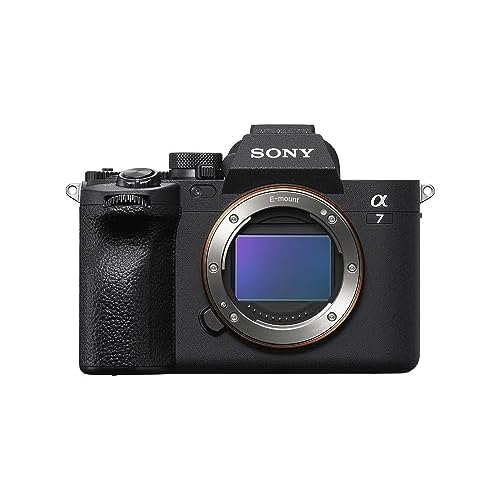

#6. Celestron RASA 8 (Rowe-Ackermann Schmidt Astrograph)
If exposure speed is your primary goal, the Celestron RASA 8 is an astronomical light cannon that operates at a breathtaking f/2.0 focal ratio. Because your Sony mirrorless camera mounts directly to the front corrector plate, the ultra-short flange depth of the E-mount system is perfectly suited to keep the optical profile slim and prevent heavy central obstruction. It captures deep exposures in thirty seconds that would take other telescopes ten minutes to gather.
- Best for: Ultra-fast deep-sky surveying and cutting through light pollution.
- Key highlight: Blazing-fast f/2.0 optical system with an optimized 32mm image circle.
- Why we recommend it: It lets you maximize the low-light ISO capabilities of Sony sensors, gathering massive amounts of structural detail without requiring long, autoguided exposures.
#7. William Optics Zenithstar 73 III
The Zenithstar 73 III is one of the most reliable, cost-effective doublets available for astrophotographers entering the refractor world with an E-mount camera. Utilizing premium FPL-53 synthetic fluorite glass, it controls fringing while offering a generous 430mm focal length at f/5.9. When paired with the dedicated Flat73 field flattener, it delivers a sharp, vibrant image circle that fits Sony APS-C and full-frame bodies cleanly.
- Best for: Intermediate astrophotographers seeking high value and rugged build quality.
- Key highlight: FPL-53 ED doublet optics yielding crisp, high-contrast star fields.
- Why we recommend it: William Optics integrates innovative features like a built-in Bahtinov focusing mask and rock-solid rotatable focuser, making manual focus adjustments on your Sony LCD seamless.
#8. Askar 103APO Triplet Refractor
The Askar 103APO is an adaptable 103mm f/6.8 air-spaced triplet telescope designed to grow alongside your astrophotography ambitions. Engineered with an ED element, it provides pristine color correction and features modular rear optics that support dedicated 1.0x flatteners, 0.8x reducers, and even 0.6x focal reducers. This adaptability ensures your Sony sensor receives sharp, flat coverage whether you are framing vast nebulae or tighter galaxy targets.


- Best for: Astrophotographers who want one modular telescope for multiple framing options.
- Key highlight: Versatile optical configuration supporting full-frame Sony coverage at three distinct focal lengths.
- Why we recommend it: Its robust 3.3-inch rack-and-pinion focuser handles heavy mirrorless camera loads with zero image shift, making framing adjustments easy.
#9. Sky-Watcher Evostar 72ED
The Sky-Watcher Evostar 72ED is the ultimate budget-friendly entry point for bringing a Sony E-mount camera into serious prime-focus telescope imaging. With a 420mm focal length at f/5.8, this lightweight doublet uses Schott optical glass to deliver remarkably clean images given its affordable price point. It works exceptionally well with crop-sensor Sony bodies like the a6000 or a6700 series, requiring minimal mount payload capacity to track smoothly.
- Best for: Beginners on a budget using Sony APS-C mirrorless cameras.
- Key highlight: Exceptional price-to-performance ratio in a featherlight 4.3 lb package.
- Why we recommend it: It requires minimal investment in heavy equatorial mounts, allowing you to attach your Sony camera and start capturing high-resolution astro-images right away.
#10. Takahashi FSQ-106EDX IV
For those willing to invest in the gold standard of optical craftsmanship, the Takahashi FSQ-106EDX IV is legendary among professional astrophotographers. This modified Petzval quadruplet refractor generates a massive, unprecedented 88mm image circle with zero field curvature across any consumer sensor in existence. It resolves the tiniest star structures with surgical precision, flawlessly catering to the ultra-dense pixel pitches of Sony’s 61-megapixel full-frame sensors.
- Best for: Uncompromising, observatory-grade astrophotography on high-resolution full-frame bodies.
- Key highlight: An astonishing 88mm corrected image circle with state-of-the-art color correction.
- Why we recommend it: It is practically future-proof, ensuring that whatever high-resolution Sony E-mount camera you mount to it will perform at the theoretical optical limits of physics.
How to Choose the Best Telescope for Sony E Mount
When selecting a telescope for your Sony mirrorless camera, your first consideration should be the illuminated image circle. If you shoot with full-frame bodies like the A7 or A1 series, look for a telescope that explicitly supports a 44mm image circle (via Petzval designs or dedicated flatteners) to prevent aggressive vignetting and peripheral star stretching. Pay close attention to backfocus specifications as well; while Sony’s 18mm flange distance allows great flexibility, your adapter stack must match the telescope’s optical requirements precisely. Finally, match the telescope’s weight and focal length to your tracking mount, ensuring that your setup remains stable during extended exposures.
Final Thoughts
Equipping your Sony camera with an optically matched telescope transforms an already capable mirrorless body into an elite deep-space observatory. Choose the optical design that matches your target ambitions and payload limits, attach your E-mount adapter, and prepare to capture deep space like never before.


Similar Posts